
See the system as a whole
The diagram below explains the broad roles of major components. It is a conceptual guide, not a manufacturer wiring diagram, service schematic, refrigerant routing plan or instruction to dismantle the appliance. Your model may arrange these parts differently.
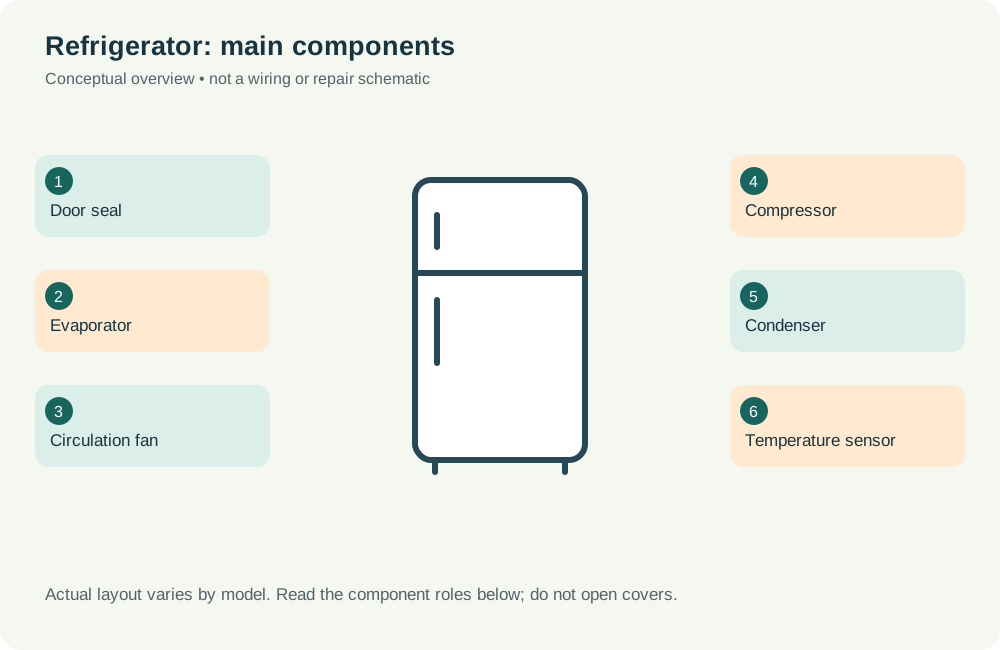
Main component roles
Use these names when describing the problem; do not remove covers to identify a part. The appliance label and owner manual are the appropriate starting point for exact model information.
| Component | What to understand |
|---|---|
| Door seal | Helps reduce warm-air entry when the door is closed. |
| Evaporator | Absorbs heat from the cabinet or circulated air. |
| Circulation fan | Moves air on models with forced circulation. |
| Compressor | Circulates refrigerant through the sealed cooling system. |
| Condenser | Releases heat to the surrounding space. |
| Temperature sensor | Provides temperature information to the control system. |
Normal operating sequence
- Cabinet heat absorbed
- Compressor circulates refrigerant
- Heat released outside
- Control regulates temperature
Controls coordinate the sequence and may pause it for safety or because a sensor detects an unusual condition. A stopped cycle or error message can have several causes. The diagram cannot identify a failed component without appropriate inspection.
What you can safely observe
Allow ventilation specified by the model manual, keep door seals clean and avoid obstructing internal air vents. Move temperature-sensitive food to suitable alternative cold storage if cooling fails. A repair call does not establish whether food is safe to eat. Never puncture ice or refrigerant tubing.
Tell the technician what happens before the fault, which lights or codes appear and whether the problem is repeatable. Avoid guessing that a named component must be replaced because a similar symptom appears online.