
See the system as a whole
The diagram below explains the broad roles of major components. It is a conceptual guide, not a manufacturer wiring diagram, service schematic, refrigerant routing plan or instruction to dismantle the appliance. Your model may arrange these parts differently.
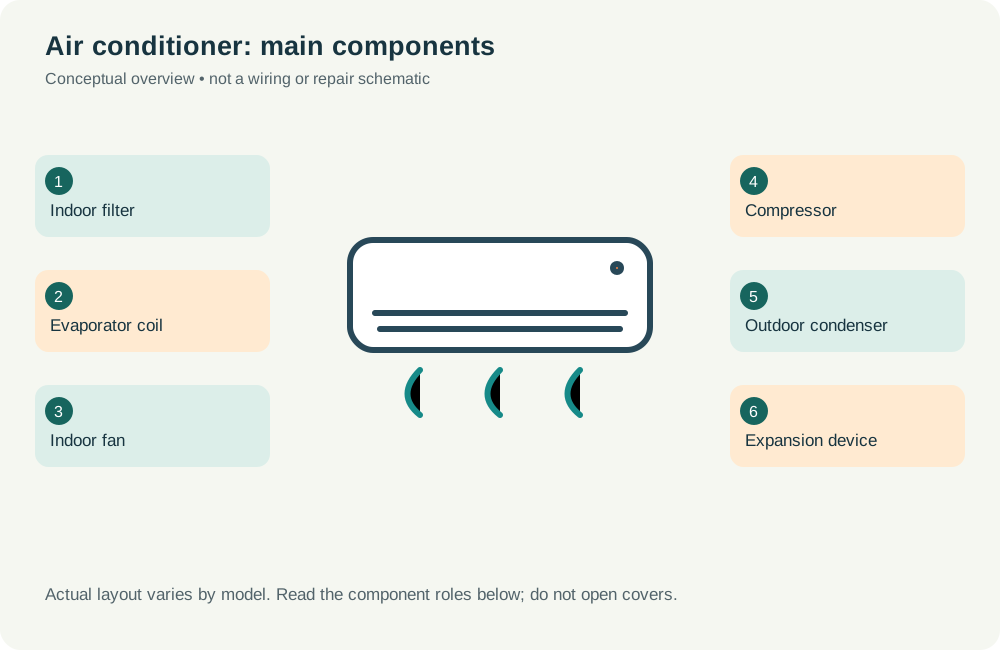
Main component roles
Use these names when describing the problem; do not remove covers to identify a part. The appliance label and owner manual are the appropriate starting point for exact model information.
| Component | What to understand |
|---|---|
| Indoor filter | Traps airborne dust before it reaches the indoor coil. |
| Evaporator coil | Absorbs heat from indoor air through the refrigerant circuit. |
| Indoor fan | Moves room air across the indoor coil. |
| Compressor | Raises refrigerant pressure as part of the cooling cycle. |
| Outdoor condenser | Releases collected heat to outdoor air. |
| Expansion device | Controls refrigerant flow and pressure reduction. |
Normal operating sequence
- Indoor heat absorbed
- Compressor raises pressure
- Outdoor coil rejects heat
- Expansion lowers pressure
Controls coordinate the sequence and may pause it for safety or because a sensor detects an unusual condition. A stopped cycle or error message can have several causes. The diagram cannot identify a failed component without appropriate inspection.
What you can safely observe
Clean only filters designated as user-removable in your manual, with the power isolated. Let them dry before refitting. Leave outdoor ventilation clear, avoid spraying electrical areas and arrange a service when cooling or drainage changes. Never open refrigerant pipes yourself.
Tell the technician what happens before the fault, which lights or codes appear and whether the problem is repeatable. Avoid guessing that a named component must be replaced because a similar symptom appears online.